Solana Crypto Guide 2026: Tech, Ecosystem & Solana Price Prediction
If Bitcoin is “Digital Gold” and Ethereum is “Digital Oil,” then Solana crypto is “Digital Fiber Optic.” It represents speed, efficiency, and the seamless transfer of value at the speed of light.
As we move through 2026, Solana crypto has solidified its position not just as an “Ethereum Killer,” but as a parallel universe of high-performance blockchain activity. It is the engine of choice for high-frequency trading (DeFi), massive-scale consumer applications (DePIN), and the next generation of web-scale payments.
Owning SOL is not just about holding a token; it’s a bet on a future where blockchain transactions are as fast, cheap, and invisible as sending a WhatsApp message. In this ultimate guide, we strip away the noise to understand the unique time-based architecture of Solana crypto, how to navigate its ecosystem safely, and what the latest Solana price prediction models suggest for the end of the decade.
Key Takeaways (At a Glance)
- The “Nasdaq” of Blockchains: While Ethereum focuses on modularity and Layer 2s, Solana crypto is a monolithic beast designed for global scale on a single layer. It processes thousands of transactions per second (TPS) for fractions of a penny.
- Proof of History (PoH): Solana’s secret sauce isn’t just faster computers; it’s a cryptographic clock that allows nodes to agree on time without talking to each other, unlocking massive speed.
- Consumer Crypto Hub: From meme coins to DePIN (Decentralized Physical Infrastructure Networks) like Helium and Hivemapper, Solana crypto is the home of retail and real-world utility.
- Yield Generation: You can earn 5-7% APY by staking SOL, and even more through “Liquid Staking” and DeFi strategies unique to its high-speed environment.
- Future Value: Every major Solana price prediction now factors in institutional flows from partners like Visa and Shopify, helping it shed its “beta” reputation.
Part 1: Solana Technology Explained (The Speed of Light)
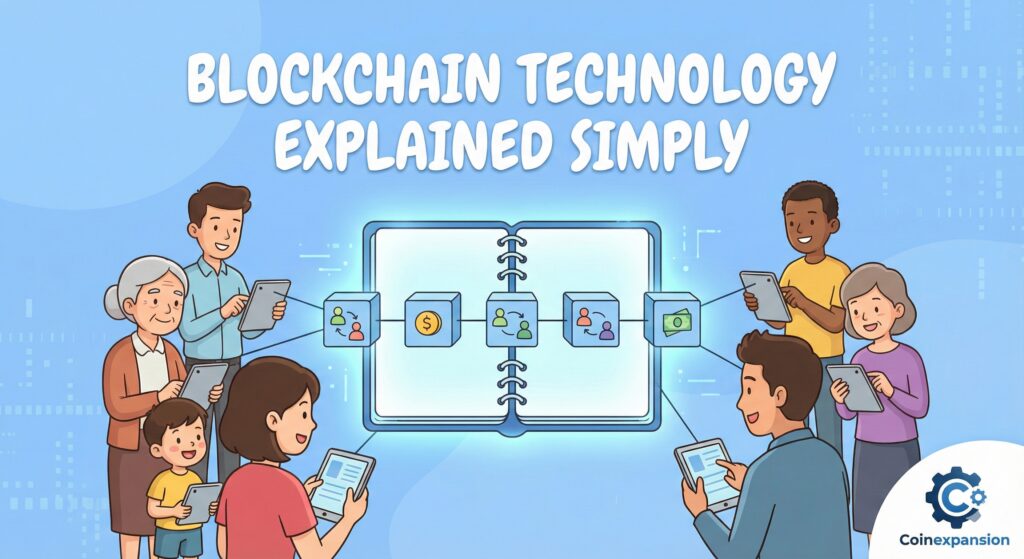
To understand Solana crypto, you must forget how other blockchains work. Most chains are like a busy conference room where everyone has to agree on the order of speakers before anyone talks. Solana is like a synchronized dance where everyone knows exactly when to step because they all watch the same clock.
1. The Core Innovation: Proof of History (PoH)
This is the breakthrough. In Bitcoin or Ethereum, nodes spam each other to agree on “who did what first.” This takes time. Solana introduces a cryptographic clock.
- The Concept: Before a block is even produced, the network has a mathematical proof that time has passed.
- The Result: Validators don’t need to wait for confirmation from others to organize transactions. They just look at the timestamp. This allows Solana crypto to process transactions in parallel, rather than one by one.
2. The Consensus: Tower BFT (Proof of Stake)
PoH is the clock, but Tower BFT is the security guard. It is Solana’s version of Proof of Stake.
- Validators: Just like Ethereum, you stake SOL to secure the network.
- The Difference: Because of the PoH clock, validators can vote on the validity of blocks faster. They “bet” their stake on the fork they believe is correct, and because the timeline is pre-verified, finality happens in milliseconds.
3. The Architecture: Monolithic vs. Modular
- Ethereum (Modular): “I am too slow, so I will build extra roads (Layer 2s) on top of me to handle the traffic.”
- Solana (Monolithic): “I will just make my main road 1,000 lanes wide.” In 2026, the Solana crypto ecosystem is doubling down on scaling its base layer (Layer 1) with updates like Firedancer a new validator client that aims to theoretically boost speed to over 1 million TPS.
4. The Economics: Rent and Burn
- Rent: Accounts pay “rent” to store data on-chain. This prevents the network from getting bloated with useless data.
- Fee Burn: Half of every transaction fee is burned, introducing a deflationary force. However, unlike Ethereum, Solana still has some inflation to pay validators, though this inflation rate decreases by 15% every year until it hits a stable 1.5%.
Part 2: Where to Buy Your First Solana
In 2026, Solana crypto is listed everywhere, but the “best” place depends on whether you want convenience or deep DeFi integration.
1. Centralized Exchanges (The Easy On-Ramp)
- Coinbase: The most user-friendly. Great for US users. Direct fiat on-ramps.
- Binance / Bybit: Best for international users. Deepest liquidity and supports direct withdrawals to SPL (Solana Program Library) tokens.
- Kraken: Excellent security record and staking integration.
2. On-Ramp Aggregators (Direct to Wallet)
- Phantom / Solflare: The native wallets of Solana crypto have built-in “Buy” buttons. They use providers like MoonPay or Stripe to let you buy SOL directly with a debit card inside the app. Convenience is high, but so are the fees.
3. Decentralized Exchanges (DEXs)
- Jupiter: This is the google of Solana trading. It is an aggregator that finds you the best price across all other exchanges (Raydium, Orca, etc.). If you have USDC on Solana, you swap it for SOL here.
Part 3: Where to Store Your Solana (Wallets)
Because Solana crypto uses a different programming language (Rust) than Ethereum, you usually need a specific wallet. You cannot use your standard Ethereum MetaMask address.
1. The Best Software Wallets (Hot Storage)
- Phantom: The king of Solana wallets. It is sleek, fast, and shows your NFTs beautifully. It has built-in security checks that warn you if you are about to sign a scam transaction.
- Solflare: The “power user” wallet. Great for staking and advanced DeFi management. It mimics the functionality of a hardware wallet in a software interface.
- Backpack: A newer wallet focused on “executable NFTs” (xNFTs). It feels more like an operating system than just a wallet.
2. The Best Hardware Wallets (Cold Storage)
- Ledger Nano X / Stax: Fully supports Solana. You can connect your Ledger to Phantom to get the best of both worlds Phantom’s interface with Ledger’s security.
- Trezor Safe 3 / Model T: Now supports Solana, offering a great open-source alternative.
Part 4: 5 Ways to Earn Yield on Solana
The high speed of Solana crypto makes it a paradise for yield farmers. It’s cheaper to move money around, so you can compound your earnings more often.
1. Native Staking (The Benchmark)
- What it is: You lock your SOL to help secure the network.
- Yield: ~5-7% APY.
- How: Do it directly inside the Phantom or Solflare wallet. Choose a validator (preferably one outside the top 20 to help decentralization) and click “Stake.”
2. Liquid Staking (The Smart Play)
- What it is: Instead of locking your SOL, you give it to a protocol like Jito or Marinade.
- The Reward: You get a receipt token (like JitoSOL or mSOL) that rises in value. You can use this token in DeFi while it earns staking rewards in the background.
3. Lending & Borrowing
- Platforms: Kamino, Marginfi, Save (formerly Solend).
- Strategy: Deposit your SOL or JitoSOL to earn interest from borrowers. Or, borrow USDC against your SOL to buy more Solana crypto (leverage), though this is risky.
4. Liquidity Provision (DEXs)
- Platforms: Orca, Raydium, Meteora.
- Strategy: Provide liquidity to trading pairs like SOL-USDC. Because Solana is fast, “Concentrated Liquidity” works very well here, allowing you to earn high fees with less capital.
5. DePIN Mining
- What it is: Run physical hardware to earn tokens on the Solana network.
- Examples:
- Helium: Run a hotspot to provide 5G/WiFi coverage.
- Hivemapper: Put a dashcam in your car to map roads.
- Render: Rent out your GPU power for 3D rendering.
Part 5: Solana Price Prediction 2026 – 2030
Any accurate Solana price prediction must look at adoption, not just speculation. Solana crypto value is derived from activity. Unlike Bitcoin (Scarcity), Solana needs people using it paying fees, minting NFTs, and trading meme coins to drive value to the token.
The Drivers of Value:
- Firedancer Upgrade: If successful, this makes Solana the only chain capable of handling global stock market speeds (1M+ TPS), a key factor in every bullish Solana price prediction.
- Mobile Crypto: The Solana Saga phone and “SMS” (Solana Mobile Stack) could make it the first chain to truly crack mobile crypto adoption.
- Payments: Partnerships with Visa and Shopify suggest Solana could become the backend for stablecoin payments globally.
The Prediction Table
| Year | Bear Case (Network Stalls) | Base Case (Adoption Growth) | Bull Case ( The “Visa” of Crypto) |
| 2026 | $120 | $235 | $350 |
| 2028 | $150 | $450 | $800 |
| 2030 | $200 | $650 | $1,200+ |
Export to Sheets
The Logic Behind the Solana Price Prediction:
- Base Case ($650 by 2030): The standard Solana price prediction assumes it solidifies itself as the #2 smart contract platform. It captures the majority of retail/consumer traffic while Ethereum keeps the high-value institutional settlement layer.
- Bull Case ($1,200+ by 2030): An aggressive Solana price prediction sees “The Flippening” of activity. Solana crypto becomes the default blockchain for everything finance, social media, and physical infrastructure. It eats into traditional payment networks like Visa/Mastercard.
- Bear Case ($200 by 2030): A conservative Solana price prediction accounts for risks like network outages returning or a new, faster Layer 1 (like Sui or Aptos) stealing the “speed” narrative.
- Institutional Factor: The most recent Solana price prediction revisions now account for ETF approvals, which would lock up significant supply in custodial vaults.
- Long Term: Ultimately, almost every Solana price prediction for 2030 is contingent on Firedancer launching successfully. Without it, the network hits a glass ceiling; with it, the sky is the limit.
Conclusion: The Execution Machine
Solana is not trying to be gold. It is trying to be the World Wide Web of value.
It is built for a future where blockchain is invisible, fast, and virtually free. While Ethereum is building a secure vault, Solana crypto is building a high-speed raceway. Both have their place, but Solana’s upside lies in its ability to onboard the next billion users who don’t care about “decentralization” as much as they care about a fast, cheap, and fun experience.
Your Next Step: Download Phantom Wallet. Buy $10 worth of SOL. Go to Jupiter and make a swap. Use Helium Mobile. Experience the speed. Once you feel the difference of a sub-second transaction, you’ll understand why the Solana crypto army is so loyal and why the long-term Solana price prediction remains so optimistic.
Frequently Asked Questions (FAQ)
Q: Is Solana crypto centralized? A: It is more centralized than Ethereum, but less than critics say. It has thousands of validators, but running one is expensive (requires supercomputer-grade hardware). This is the tradeoff: slightly less decentralization for massive speed.
Q: What is the latest Solana price prediction for 2026? A: Most analysts see a base Solana price prediction of around $235 by 2026, assuming continued adoption and network stability.
Q: Why does Solana sometimes crash? A: In its early years (2021-2022), Solana crypto suffered several outages due to being overwhelmed by bot traffic. However, recent upgrades (QUIC, localized fee markets) and the upcoming Firedancer client have significantly improved stability.
Q: Can I lose money staking SOL? A: The main risk is “Slashing” (if your validator acts maliciously, you lose a portion of funds), though this is extremely rare on Solana. The bigger risk is the USD price of Solana crypto dropping while it is locked up.
Q: What is the “Ethereum Killer” narrative? A: It’s the idea that Solana will replace Ethereum. In reality, 2026 shows a multi-chain future. Ethereum is the “Settlement Layer” (high security, high value), and Solana crypto is the “Execution Layer” (high speed, consumer apps). They likely will coexist.