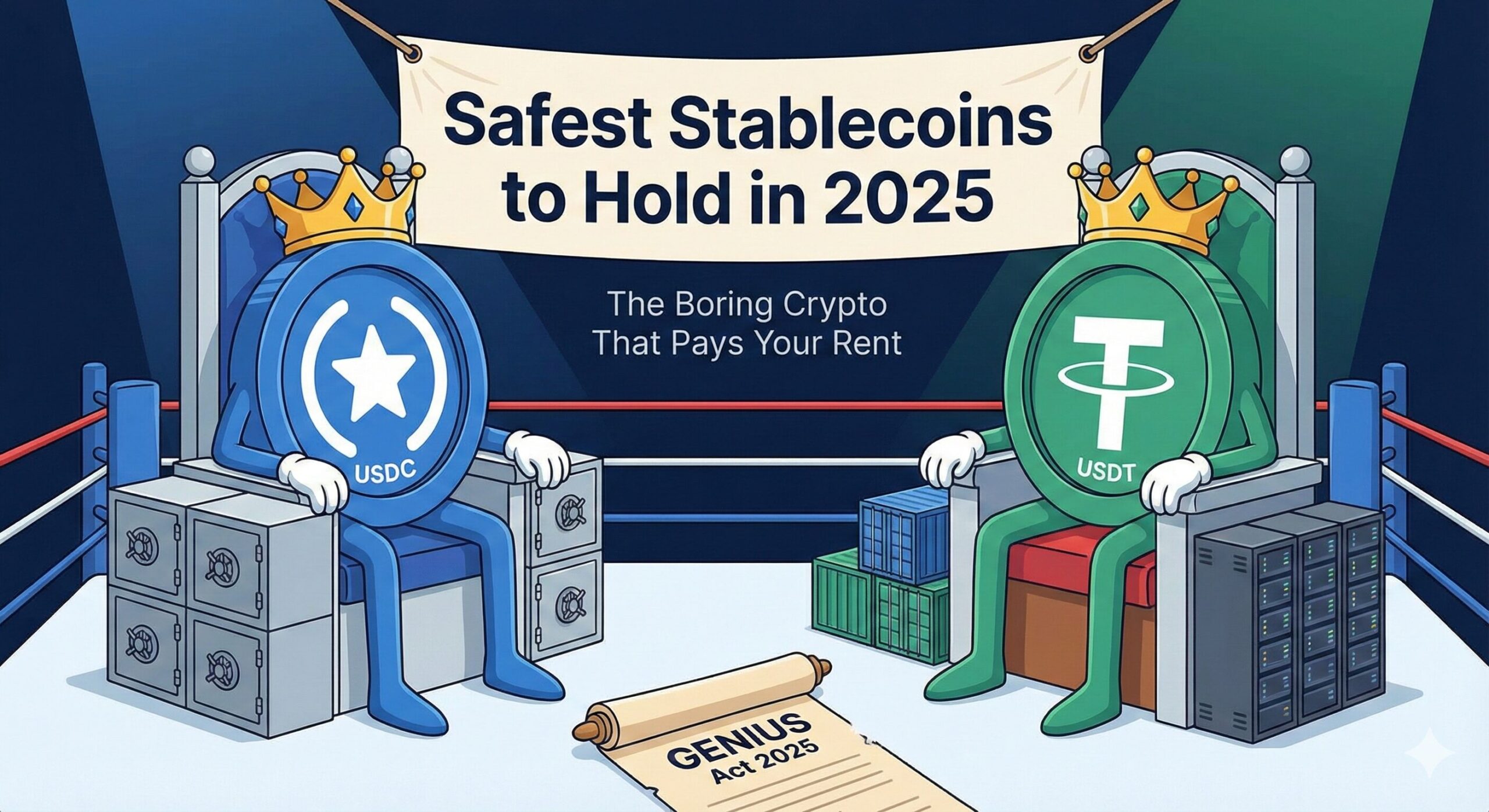
What Are Stablecoins? Best Stable Coins to buy for 10% Yield
It is easy to get blinded by the flashing lights of “Lambo” culture. In the crypto world, everyone is hunting for that 100x moonshot, the random meme coin that turns a $500 stimulus check into a retirement fund by next Tuesday.
But as someone who has been through the meat grinder of multiple market cycles, let me tell you a secret: the people who actually survive and get rich in this game aren’t the ones chasing the hype. They are the ones obsessed with the “boring” stuff, and stablecoins are boring. In this article, we have listed the best stablecoins to buy for a minimum yield of 10%.
In 2026, the landscape has changed. With the GENIUS Act in the US and MiCA regulations in Europe fully active, stablecoins are no longer a “gray area” safety net; they are a financial superpower. If you want to know “what are stablecoins?” And how to use them to earn more than 10% interest by just keeping them in your wallet.
What Are Stablecoins? (The Basics)
Before we dive into the strategy, let’s define the term. What are stablecoins? Imagine if you could email a dollar bill to a friend in London instantly, without a bank taking a cut, and without worrying that the dollar would turn into 50 cents by the time it arrived. That is a stablecoin.
Unlike Bitcoin, Ethereum, or other mainstream cryptocurrencies, which act like “digital gold” (their prices swing wildly based on demand), a stablecoin is designed to be intentionally boring. It is “pegged” to a real-world asset, usually the US Dollar. One coin equals one dollar.
They provide the lightning speed of blockchain technology with the economic stability of cold, hard cash.
Stablecoins are the primary medium of exchange in the digital economy. Whether you are buying an NFT, trading a new token, or just moving money across borders, you are likely using a stablecoin to do it.
Check out Crypto Coins List: Types of Cryptocurrencies (2026 Edition)
The 3 Types You Need to Know
Not all “digital dollars” are built the same. Knowing the difference is what keeps you from losing your shirt:
- Fiat-Backed: For every digital coin, $1 of real cash or government bonds is kept in a bank vault (e.g., USDC, USDT).
- Crypto-Backed: These are backed by other cryptos like Ethereum but are “over-collateralized” to handle price swings (e.g., DAI).
- Algorithmic: These use complex math and “burning/minting” mechanics to stay at $1. Warning: These are the riskiest. Remember the Terra/Luna collapse of 2022? That was an algorithmic failure.
The 5 Best Stablecoins of 2026
If you are looking for the best stablecoins to buy this year, you need to look at liquidity, regulation, and track record. Here are the five heavyweights currently dominating the market.
1. Tether (USDT)
Tether is the undisputed king of the mountain. If you look at any major exchange, the highest trading volume is almost always in USDT pairs.
Historically, Tether faced criticism for being opaque about its reserves. However, by 2026, they have adapted to global pressure by providing more frequent attestations and shifting a massive portion of their $140B+ reserves into US Treasury bills.
- Why it’s one of the best stablecoins: It is available on almost every blockchain (Ethereum, Tron, Solana, TON) and every major exchange. If you are a high-frequency trader or moving money between obscure platforms, USDT is your best friend. Tether, without a shadow of doubt, is the best stablecoin to buy.
- The Risk: It is still less “regulated” by US standards compared to its peers, making it a favorite for global liquidity but a slight concern for those who want 100% legal transparency.
2. USD Coin (USDC)

If Tether is the cowboy, USDC is the “Wall Street Banker.” Created by Circle, USDC is the gold standard for transparency. It is fully regulated in the US, audited monthly by top-tier firms like Deloitte, and is the preferred choice for institutional players like Visa and BlackRock.
USDC is arguably one of the best stablecoins to buy for long-term savings. If you are worried about the government shutting down a platform or a “bank run” on a crypto issuer, USDC offers the highest level of peace of mind.
- Safety Profile: Since the passage of the GENIUS Act, USDC has solidified its position as a “Payment Stablecoin.” This means it is treated with the same legal rigor as a digital dollar in your bank account.
- Use Case: Perfect for holding your “dry powder” (cash waiting for a market dip) or for paying employees in crypto.
3. Sky (formerly DAI)
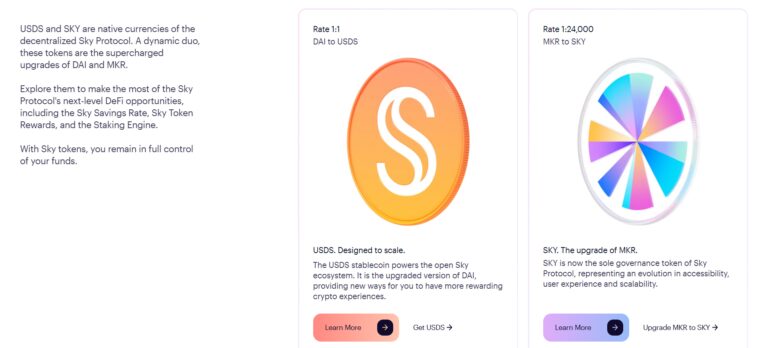
For the decentralization purists, DAI, now rebranded under the Sky ecosystem, is the heavy hitter. Unlike USDC or USDT, there is no CEO of DAI. It is managed by a Decentralized Autonomous Organization (DAO).
When considering “what are stablecoins?” in the context of DeFi (Decentralized Finance), DAI is the pioneer. It is backed by a mix of assets, including Ethereum and even “Real World Assets” (RWA) like commercial loans.
- Why it’s one of the best stablecoins: It is censorship-resistant. Because it is governed by code and smart contracts, no single company can freeze your DAI wallet.
- The Catch: It is slightly more complex to understand. To “mint” it, you often have to lock up crypto as collateral, making it a tool for advanced users rather than casual savers.
4. PayPal USD (PYUSD)
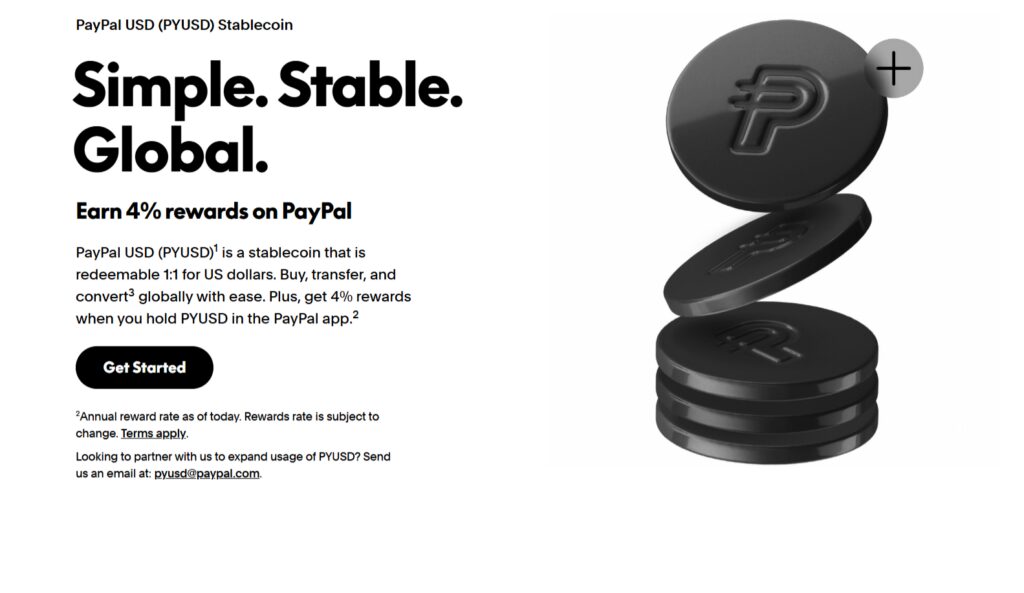
Yes, even the “old world” of finance has entered the chat. PYUSD is issued by Paxos in partnership with PayPal. In 2026, it became one of the best stablecoins to buy for retail users because it bridges the gap between your PayPal/Venmo balance and the blockchain.
- Integration: You can buy PYUSD directly inside the PayPal app and send it to any compatible crypto wallet. It is fully backed by US Treasury bills and cash.
- Reliability: Because it is issued by Paxos (a New York-regulated trust company), it carries a level of trust that traditional users find comforting. It might not have the volume of Tether yet, but for someone new to crypto, it’s a very “safe” entry point.
5. Ethena (USDe)

Ethena’s USDe is the “new kid on the block” that changed the game in late 2024 and 2025. It is a “synthetic” stablecoin. Instead of holding dollars in a bank, it uses a strategy called “Delta-Neutral Hedging.” It holds staked Ethereum and offsets the price risk with a short position.
- Why it’s among the best stablecoins: It offers native yield. While you have to “lend” other coins to earn interest, USDe generates its own “Internet Bond” yield from the underlying staking rewards.
- The Risk: It is a complex financial instrument. If the “funding rates” in the market turn negative for a long time, the peg could theoretically be stressed. It is for the savvy investor looking for maximum returns.
Check out Best Crypto Staking Platforms 2026
2026 Stablecoin Yield Comparison Table
As we navigate the 2026 crypto landscape, stablecoin yields have become the “risk-free rate” of the digital economy. While traditional banks struggle to compete, these platforms offer double-digit returns by lending your capital directly to the global margin and futures markets.
Below is the definitive March 2026 Stablecoin Yield Table across the major exchanges you requested.
Rates are estimated APY and may vary based on loyalty tiers, lock-up periods, and market volatility.
[ninja_tables id=”69119″]
Strategic Analysis of the 2026 Yield Pillars
1. The “Trader’s Choice”: Bybit & Binance
Binance and Bybit are the biggest volume exchanges in the industry ( must join for every cryptocurrency user)
These exchanges offer the most “capital efficient” yields. Because they host the largest futures markets, traders are constantly borrowing USDT and USDC to fund their long positions.
Pro Tip: Most platforms offer a “Bonus Tier.” For example, Binance might give you 12% on your first $500 of USDT and 5.5% on anything above that.
So split your stablecoins across 2-3 platforms to capture all the “Bonus Tiers” and maximize your blended APY.
Check out Binance exchange review 2026
Check out the Bybit Exchange review 2026
2. The “Social Alpha”: BingX & KuCoin
BingX Wealth and KuCoin Earn tap into the more aggressive side of the market.
BingX: Their “Wealth” management pools are optimized for 2026, often outperforming the bigger giants by focusing on niche market-making liquidity.
KuCoin: Their P2P lending engine allows you to set your own rates. During your favorite meme coin pump, you can often see DAI or USDT rates spike to 20%+ as traders scramble for exit liquidity.
Sign up for Bingx and make your first trade to grab a reward of up to $1500
Check out BingX Exchange review
Sign up to claim a bonus of up to $500
Check out Kucoin Exchange review 2026
3. The “Macro Hedger”: PrimeXBT
PrimeXBT is one of the best crypto trading platforms known for its high leverage up to 500x on major crypto pairs for trading futures.
PrimeXBT allows you to earn up to 10% on USDC while using that same balance as margin for global macro trades.
It is the only platform where your “savings account” can simultaneously be your “trading account” for Gold, S&P 500, or Forex.
Check out PrimeXBT Review 2026
4. The “Internet Bond”: Ethena (USDe)
USDe has solidified its place as a top-3 stablecoin this year. Its yield is “synthetic,” derived from staking rewards and short-position funding rates.
- Caution: While Bybit and Binance are offering aggressive 15% promotional tiers, remember that USDe is not a fiat-backed dollar. It is a financial instrument. Use it for your “Growth” stack, not your “Life Savings” stack.
The “Pioneer” Final Verdict
If you want maximum safety, stick to USDC on Binance or Bybit.
If you are hunting for the highest consistent yield, split your capital between different platforms. Because most platforms offer a “Bonus Tier.”
For example, Binance might give you 12% on your first $500 of USDT and 5.5% on anything above that.
So split your stablecoins across 2-3 platforms to capture all the “Bonus Tiers” and maximize your blended APY.
Safety and Risks: Is investing in stablecoins actually “Safe”?
When we discuss “what are stablecoins”, we have to address the “de-pegging” risk. A stablecoin is only as good as its backing.
If the company (like Circle or Tether) loses its bank account or the algorithm fails, the coin could drop to $0.90 or lower.
Is it safer than Bitcoin?
- Price Safety: Yes. Bitcoin can drop 10% while you’re eating lunch. Stablecoins (the top-tier ones) stay at $1.
- Censorship Risk: Yes. Because USDC and USDT are run by companies, they can “freeze” a wallet if the government requests it. Bitcoin cannot be frozen by anyone.
Conclusion
Don’t sleep on the “boring” side of crypto. Stablecoins might not make you a millionaire overnight, but they are the most important tool you have to stay in the game, earn real yield, and keep your sanity during the next market crash.
To maximise your portfolio. Don’t hold 100% Bitcoin, that’s a recipe for a heart attack. Keep roughly 50% or more of your portfolio in USDT or USDC.
- It’s your “War Chest”: When the market crashes, you don’t have to wait 3 days for a bank transfer. You have the “dry powder” ready to buy the dip instantly.
- Stablecoins Pay you to Wait: While stablecoins sit in your wallet, it earns 10% APY on. Binance. It’s a cash reserve that actually grows.
Check out The Next 1000x Crypto List: Which Crypto Will Explode in 2026 for Massive Gains?
Become a cryptocurrency pioneer by joining the CoinExpansion Pioneer Hub. Visit to learn about the Benefits
Frequently Asked Questions
Q: What are stablecoins?
A: They are cryptocurrencies pegged to a stable asset like the US Dollar to provide price stability on the blockchain.
Q: How to buy stablecoins safely?
A: Use a reputable exchange like Binance or Bybit, complete your KYC, and move your funds to a hardware wallet for long-term storage.
Q: How to maximise your stablecoins yield?
A: Most platforms offer a “Bonus Tier.”
For example, Binance might give you 12% on your first $500 of USDT and 5.5% on anything above that.
So split your stablecoins across 2-3 platforms to capture all the “Bonus Tiers” and maximize your blended APY.
q: Can stablecoins lose value?
A: Yes. If the underlying reserves are mismanaged or the issuer goes bankrupt, a stablecoin can “de-peg” and lose its $1 value. USDT and USDC are the safest stablecoins to invest in.
Q: Why is the interest so high?
A: Because you are essentially acting as the “bank” for high-leverage crypto traders who are willing to pay a premium to borrow your liquid cash.