Best AI Cryptocurrency: 8 Best AI Coins to Invest in 2026 (Nvidia of Blockchain)
Imagine we’re sitting at that small coffee shop on the corner. You know, the one with the slightly burnt smell but the best vibe. You lean in and ask me, “Hey, I missed the Nvidia boat. Is there any way to catch the next wave?” I’d tell you straight up: the best AI cryptocurrency market is where the real action is happening right now.
But you know as well as I do that the market in 2026 is a bit different from what it used to be. We’ve moved past the “Wild West” hype. People are actually looking for utility now.
And with the recent “Quantum Fears” rattling Bitcoin, capital is flowing into projects that actually do something.
If you’re looking for the best AI coins to invest in, you need to find the ones building the actual rails for the future.
The best AI crypto projects are no longer just whitepapers. They are shipping products. They are renting out GPUs and auditing code.
I’ve scoured the market to find the gems that are positioning themselves for a massive breakout. Let’s look at the eight heavy hitters that deserve a spot in your 2026 portfolio.
Key Takeaways for the 2026 AI Sector
- Compute is King: Decentralized GPU networks are solving the global silicon shortage.
- Privacy and Security: AI-driven auditing and zero-knowledge data layers are the “shovels” of this gold rush.
- Post-Halving Scarcity: Major projects like Bittensor are seeing supply shocks meet rising institutional demand.
- Real-World Integration: From Hollywood studios to major retail chains, AI coins are finally seeing mass-market adoption.
AI Data Privacy and Security: Protecting Your Assets
In the world of the best AI cryptocurrency investments, data privacy is the ultimate shield. Unlike centralized AI models that harvest your personal information, decentralized projects like Ocean Protocol ensure you remain in control.
However, security isn’t just about the code; it’s about where you trade and store your gems. Beginners often struggle with choosing the right platform, but understanding the difference between centralized and decentralized exchanges is vital for your safety.
While a CEX offers ease of use, a DEX provides the privacy that AI enthusiasts crave. Always prioritize platforms that align with the core philosophy of decentralized intelligence to keep your portfolio secure in 2026.
Best AI cryptocurrency list 2026
1. Render (RENDER) – The Decentralized GPU Powerhouse

Render is arguably the best AI cryptocurrency on the board for those who value infrastructure.
It lets people with powerful graphics cards rent out their unused power to creators and AI labs. In early 2026, the demand for this has gone through the roof.
Why Buy Render Now?
You should buy RENDER now because it is moving at breakneck speed. Just weeks into 2026, they launched Octane 2026, which is already being used for major CGI projects like A$AP Rocky’s latest music videos.
As the “Dispersed” compute subnet scales to meet the 10x growth in AI workloads, RENDER is capturing demand that centralized clouds like AWS just can’t handle.
Price Prediction Model (2026–2030)
- 2026 Forecast: $10.00 — Driven by the success of RenderCon in LA and visible creative adoption.
- 2027 Forecast: $18.50 — As the AI compute subnet “Dispersed” becomes a standard for research labs.
- 2028 Forecast: $32.00 — Global GPU shortages drive massive retail and enterprise migration.
- 2029 Forecast: $55.00 — Full integration with spatial computing and immersive 18K rendering projects.
- 2030 Forecast: $85.00 — Established as the backbone of the “Open Metaverse” visual layer.
Where to buy Render coin instantly
You can buy Render Coin at any one of the following best exchanges, Binance, Bybit, or Kucoin, using almost every existing payment method via their p2p platform.
You can buy Rendercoin or any other crypto cheaply using the indirect method. Read the article below to buy.
The Cheapest Ways to Buy Crypto Instantly in 2026 (Stop Wasting Money!)
2. Bittensor (TAO) – The World’s Decentralized Brain

If you’re hunting for the best AI coins to invest in for the long term, Bittensor is the “Bitcoin of AI.” It incentivizes a global network to train machine learning models collaboratively.
Why Buy Bittensor Now?
The supply shock is finally here. Following the December 2025 halving, the daily production of TAO was cut in half. We are now seeing “Wall Street leaks” about a potential Spot TAO ETF.
With the network expanding from 128 to 256 subnets and the new “dynamic TAO” system rewarding only the smartest models, the technical value is at an all-time high.
Also, check out the 10 best cryptocurrencies to invest in for the long term in 2026
Price Prediction Model (2026–2030)
- 2026 Forecast: $900 — Post-halving supply shock meets rising institutional staking demand.
- 2027 Forecast: $1,800 — A “Killer App” (like a decentralized ChatGPT) launches on a TAO subnet.
- 2028 Forecast: $3,500 — Bittensor models begin to beat centralized open-source benchmarks consistently.
- 2029 Forecast: $6,500 — Major corporations use specialized TAO subnets for private, secure model training.
- 2030 Forecast: $12,000 — TAO becomes the base currency for the global AI developer economy.
Where to buy Bittensor instantly
You can buy Bittensor at any one of the following best exchanges, Binance, Bybit, or Kucoin, using almost every existing payment method via their p2p platform.
Binance Exchange Review 2026: Is Binance safe?
3. DeepSnitch AI (DSNT) – The Security Shield
Scams are the biggest hurdle to crypto adoption. DeepSnitch AI is the best AI cryptocurrency in the security niche because it uses five proprietary AI agents to scan for manipulation and “whale” movements.
Why Buy DeepSnitch AI Now?
It is currently February’s best AI crypto projects to pick in the presale stage. Priced at $0.039, it has the potential to be one of the next 1000x crypto
Holders already have access to the five “Snitch” agents that scan for whale manipulation in real-time.
As volatility exposes weak projects, the demand for an AI “intelligence layer” that warns you before you lose money is going to skyrocket.
Price Prediction Model (2026–2030)
- 2026 Forecast: $0.075 — TGE launch leads to a discovery phase as SnitchGPT goes viral on Telegram.
- 2027 Forecast: $0.85 — Licensing of the “SnitchFeed” API to major exchanges and hardware wallets.
- 2028 Forecast: $1.50 — Becomes the standard anti-fraud layer for retail DeFi traders.
- 2029 Forecast: $2.80 — Integration into decentralized insurance as a real-time risk-assessment engine.
- 2030 Forecast: $4.50 — Mature status as the “Norton Antivirus” of the decentralized web.
4. Artificial Superintelligence Alliance (FET/ASI) – The Agent Era

The merger of Fetch.ai, SingularityNET, and Ocean Protocol has created a powerhouse. ASI is one of the best crypto projects. It is building an economy where autonomous AI agents transact and collaborate.
Why Buy ASI Now?
The Alliance is entering its most critical phase in 2026. The launch of the ASI Chain and the “ASI: Cloud” pivot means they now have the hardware muscle to back up their software.
While the price has faced short-term pressure, the strategic focus on real-world utility and machine-to-machine transactions makes it a top-tier recovery play.
Price Prediction Model (2026–2030)
- 2026 Forecast: $0.60 — Initial mainnet launch of the ASI Chain drives transaction volume.
- 2027 Forecast: $1.20 — Major logistics and supply chain firms pilot “Agentic” automation.
- 2028 Forecast: $2.50 — The “Machine-to-Machine” economy becomes a recognized investment sector.
- 2029 Forecast: $4.80 — ASI captures a significant portion of the automated gig economy market.
- 2030 Forecast: $8.50 — Reaches its vision as the autonomous economic layer of the internet.
Also, check out the Best layer 2 Coins to invest in
5. The Graph (GRT) – The Data Feed for AI

The Graph is often called the “Google of Blockchains.” It organizes on-chain data so that apps and AI agents can find it.
It is an infrastructure monopoly and one of the best AI coins to invest in 2026.
Why Buy The Graph Now?
AI agents are only as good as the data they eat. In 2026, query volume is hitting all-time highs as autonomous bots require real-time blockchain data to make trades.
With new “SQL Engines” making it easier for traditional developers to build, the network effect is reaching a tipping point.
Price Prediction Model (2026–2030)
- 2026 Forecast: $1.50 — Continuous mainnet upgrades and integration of new chains like Base drive query fees.
- 2027 Forecast: $2.50 — Enterprise adoption and cross-chain standardization become the industry norm.
- 2028 Forecast: $3.20 — The Graph becomes the standard data layer for all Web3 social media.
- 2029 Forecast: $4.00 — Massive token burn from query fees makes GRT a deflationary asset.
- 2030 Forecast: $5.50 — Established as the immutable “Library of Alexandria” for the digital age.
6. Akash Network (AKT) – The Open Compute Marketplace
Akash is a decentralized marketplace for cloud computing. It allows startups to rent GPU power at a fraction of the cost of Amazon or Google.
Why Buy Akash Network Now?
The global GPU shortage is only getting worse. While the big tech giants buy up all the new chips, Akash connects startups with the “hidden” supply.
Their support for NVIDIA Blackwell GPUs in early 2026 has made them the go-to platform for high-end AI research labs looking for affordable power.
Check out the Best RWA coins to invest in for unlimited profits
Price Prediction Model (2026–2030)
- 2026 Forecast: $10.00 — Blackwell GPU support attracts a new wave of high-end AI research.
- 2027 Forecast: $18.00 — Partnerships with major Web2 cloud providers looking for “burst” capacity.
- 2028 Forecast: $35.00 — Akash becomes the default backend for censorship-resistant AI models.
- 2029 Forecast: $65.00 — The AKT token captures value from billions in network lease fees.
- 2030 Forecast: $110.00 — Reaches a status rivaling traditional cloud giants in specialized AI compute.
7. ZEROBASE (ZBT) – The Privacy-First Data Layer
ZEROBASE is building the cryptographic trust layer for the AI economy. It uses zero-knowledge (ZK) proofs to allow for privacy-preserving and verifiable computation, making it one of the best AI coins to invest in.
Why Buy ZEROBASE Now?
Privacy is the “secret sauce” of 2026. After raising $5 million from top-tier VCs such as Symbolic Capital, ZBT has surged by more than 150%.
As developers and institutions look for ways to train AI without exposing sensitive data, ZEROBASE is positioning itself as the mandatory infrastructure for the privacy-AI narrative.
Price Prediction Model (2026–2030)
- 2026 Forecast: $0.28 — Capital rotation into emerging privacy-infrastructure projects drives growth.
- 2027 Forecast: $0.65 — Launch of the “Privacy-Proving” network for institutional DeFi.
- 2028 Forecast: $1.20 — Integration into major healthcare and financial AI applications.
- 2029 Forecast: $2.10 — ZEROBASE becomes the data availability standard for sensitive AI dApps.
- 2030 Forecast: $3.50 — Established as a top-tier infrastructure coin for the secure internet.
Also, check out the Best Depin Projects to invest in
8. Kyuzo’s Friends (KO) – AI-Powered Social Gaming

Kyuzo’s Friends is a Web3 social game that uses AI to create interactive characters. It combines blockchain ownership with social mechanics to create a “living” digital world.
Why Buy Kyuzo’s Friends Now?
It is one of the best AI crypto projects for retail investors who want exposure to the GameFi and AI convergence.
After a successful launch on the LINE Mini App, it is tapping into hundreds of millions of users.
With plans for cross-chain expansion to Ethereum and a native NFT marketplace, it is one of the best AI coins to invest in, offering a high-potential “double play” in gaming and AI.
Price Prediction Model (2026–2030)
- 2026 Forecast: $0.15 — Cross-chain expansion to Ethereum and BSC broadens the user base.
- 2027 Forecast: $0.45 — Launch of the NFT marketplace creates tangible utility for the token.
- 2028 Forecast: $1.10 — Governance features allow the community to shape the future of the game.
- 2029 Forecast: $2.20 — Kyuzo’s Friends becomes a leading social-AI metaverse platform.
- 2030 Forecast: $3.50 — Mature ecosystem status with a dedicated, global player base.
Conclusion: How to Build Your best AI cryptocurrency Portfolio in 2026
The convergence of AI and Crypto isn’t just a trend anymore; it’s a technical necessity. AI needs decentralized data to stay open, and crypto needs AI to find real-world utility.
When you are looking for the best AI cryptocurrency, remember that infrastructure projects are the ones that survive the volatility.
If you are building your basket of best AI coins to invest in, think about diversification.
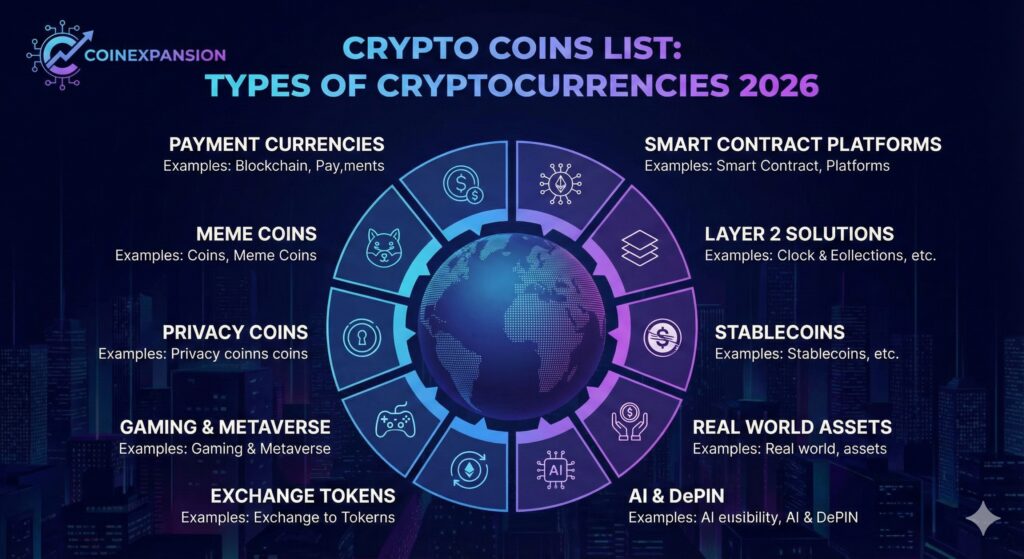
Diversify your portfolio. Check out Crypto Coins List: Types of Cryptocurrencies (2026 Edition)
A balanced portfolio for the AI Crypto Category might look like this:
- 40% in compute (Render/Akash)
- 30% in data/intelligence (TAO/The Graph)
- 30% in high-alpha projects like DeepSnitch AI or Kyuzo’s Friends.
And hey, don’t get too caught up in the short-term noise. The “Quantum Fears” of February 2026 might rattle the market today, but the builders are still building.
Stick to the projects that solve real problems, keep your head cool, and I’ll see you at the next bull run
Never leave your coin on the Exchange or Hotwallet. Use a hardware wallet if you want to play long in the world of cryptocurrency.
Check out the 4 Best Hardware wallets
Note – The path to 1000x isn’t found on Reddit; it’s built in the Hub.
💎 Join the first 1,000 ‘Founding Pioneers‘ for just $3/mo and get the fastest AI coin alerts in the industry before the gates close
FAQ: Your Burning Questions Answered
Q: Where is the best AI cryptocurrency market heading in 2026?
A: It is moving toward utility. Projects that provide GPU power, secure data, or AI-driven security are the ones gaining the most institutional attention and capital.
Q: Is it too late to join the best AI crypto projects?
A: Not at all. While the early gains of 2024 were huge, 2026 is the year when these projects are actually proving their value. Most are still in the early stages of mass-market adoption.
Q: Can these AI coins really hit a 1000x return?
A: Of course, it is possible for smaller-cap projects like DeepSnitch or Kyuzo’s Friends, but larger projects like Render or Bittensor are more likely to see steady, multi-bagger growth.