7 Best Crypto Freelance Sites to Get Paid in Bitcoin in 2026
Imagine doing the exact same work you do right now, writing code, designing logos, or translating text, but instead of waiting weeks for a bank transfer that gets eaten up by fees, you get paid instantly in Bitcoin or US Dollar-pegged stablecoins.
If you are tired of high bank fees and slow transfers, switching to the 7 best crypto freelance sites to get paid in bitcoin is the smartest move you can make in 2026. These platforms allow you to keep more of your hard-earned money while working with global clients.
While we focus on professional work here, you can also explore other methods in our guide on how to make Bitcoins for free and the best ways to earn Bitcoins to stack even more sats alongside the 7 best crypto freelance sites to get paid in bitcoin
Before you start applying, it helps to have blockchain technology explained simply so you understand how these decentralized payments are secured on-chain.
But where do you find these jobs? The traditional giants like Upwork and Fiverr are still stuck in the fiat world. To earn crypto directly, you need to look at the new wave of Web3 freelance marketplaces.
These platforms use smart contracts to guarantee payments, lower fees significantly, and connect you with forward-thinking tech companies.
In this guide, we are going to break down the best crypto freelance sites to get paid in Bitcoin and other cryptocurrencies in 2026.
Key Takeaways: The 2026 Shortlist
- Best Overall: LaborX is the most robust, “Upwork-style” platform dedicated entirely to crypto payments and smart contract protections.
- Best for Passive Networking: Bondex acts like the LinkedIn of Web3, gamifying the process of building your professional profile.
- Best for Any Job: Bitwage isn’t a marketplace but a tool that lets you receive your salary in Bitcoin from any employer, even if they pay in dollars.
- Best for Zero Fees: CryptoTask offers a decentralized approach with incredibly low fees compared to traditional platforms.
- Best for Developers: Gitcoin is the go-to hub for coders to earn bounties and grants in ETH and other tokens.
Why Trust Us? (Our Gig Economy Experience)
Our team has been navigating the freelance economy for over a decade. We made the switch to crypto payments back in 2019 when it was still difficult and confusing.
We have dealt with clients who wanted to pay in obscure tokens, navigated the complex tax implications, and used services like Bitwage to convert regular client invoices into Bitcoin.
Having navigated the Web3 space for years, we have handpicked the 7 best crypto freelance sites to get paid in Bitcoin based on their security, payment speed, and the quality of jobs available for freelancers.
Our team doesn’t just work in the industry; we live it. Our advice on the 7 best crypto freelance sites to get paid in bitcoin is backed by the same research we put into our actionable crypto trading tips for beginners to help you manage your earnings wisely.
The Two Ways to Earn: Native vs. Hybrid
Before you sign up, you need to understand that there are two distinct ways to get paid in crypto.
1. Native Crypto Marketplaces: These are platforms like LaborX or CanWork. Everything happens on-chain. You create a profile, the client hires you, and the money is locked in a smart contract escrow. When the job is done, the crypto is released directly to your wallet.
Understanding how these platforms settle payments requires a basic knowledge of CEX vs DEX: centralized vs decentralized exchanges, as most of the 7 best crypto freelance sites to get paid in bitcoin rely on one of these two infrastructures to move your funds.
- Pros: Lower fees, instant global payments, no banks involved.
- Cons: Smaller pool of clients compared to Upwork.
2. The Hybrid Method (Bitwage): This allows you to work for a normal company that pays in Fiat (USD/EUR), but you receive Crypto. You give your employer a bank account number provided by Bitwage. When they deposit your salary, Bitwage converts it to Bitcoin and sends it to your wallet.
Before you start applying on the 7 best crypto freelance sites to get paid in bitcoin, make sure you have downloaded one of the best crypto wallets to keep your private keys and your freelance earnings safe from exchange hacks.
- Pros: You can work for anyone, even your local coffee shop.
- Cons: You are subject to exchange rates and service fees.
One of the biggest reasons to use the best crypto freelance sites to get paid in bitcoin is the ‘Smart Contract Escrow.’ In traditional freelancing, you often have to trust that a client will pay you after the work is done. In Web3, the process is automated.
While working for a salary is the most direct way to build a portfolio on the 7 best crypto freelance sites to get paid in bitcoin, many professionals also diversify their income by using the trusted cloud mining sites and best crypto mining platforms to earn rewards passively.
1. LaborX: The “Upwork” of Web3
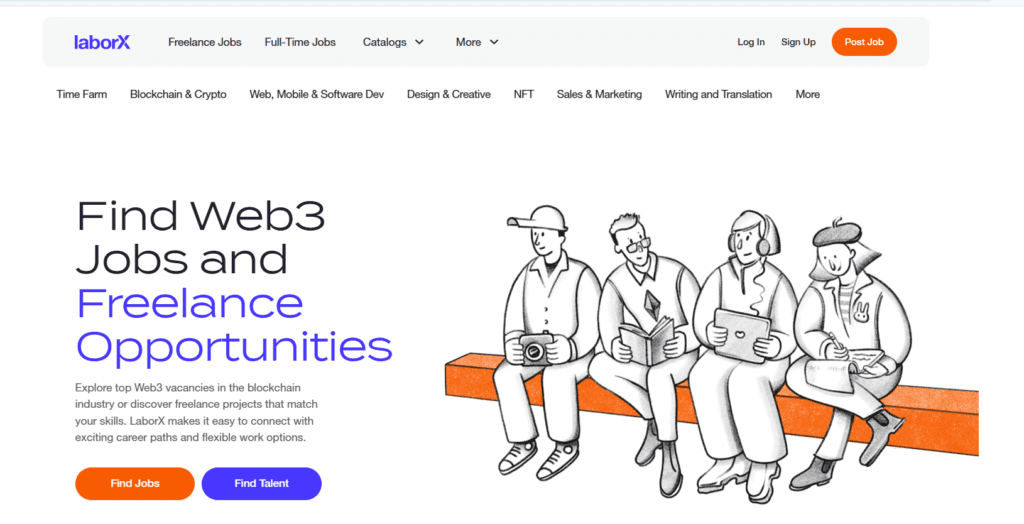
If you are looking for a direct replacement for traditional freelance sites, LaborX is the undisputed leader in 2026. It feels familiar but has the power of blockchain under the hood.
When evaluating the 7 best crypto freelance sites to get paid in bitcoin, LaborX consistently ranks at the top due to its robust smart contract escrow system that protects both the freelancer and the client.
How it Works: You create a “Talent” profile listing your skills. Clients post jobs or browse profiles. When you start a contract, the client deposits the payment (in USDT, USDC, ETH, or WBTC) into a smart contract escrow.
- Protection: The money is locked. The client cannot run away without paying, and you cannot run away without working.
- Fees: LaborX charges significantly lower fees than traditional platforms. The “Talent” fee is usually around 5-10%, compared to the 20% often seen elsewhere. If you hold their native token (TIME), you can reduce these fees to zero.
Our Take: LaborX has the highest volume of actual job postings. We see regular gigs for writers, translators, video editors, and community managers. It is the first place you should look.
Since you are receiving direct payments, make sure you are using one of the best crypto wallets to keep your hard-earned tokens away from exchange risks.
Traditional platforms like Upwork can take up to 20% of your earnings. However, the 7 best crypto freelance sites to get paid in bitcoin focus on peer-to-peer transactions. Bitcoin, you aren’t limited by your local currency’s inflation or banking delays.
2. Bondex: The Gamified Professional Network

Bondex is trying to disrupt LinkedIn. It is a talent network that rewards you for participating.
How it Works: You build a profile, upload your resume, and verify your skills. Instead of just sitting there, your profile “mines” rewards (BNDX tokens) based on how complete and verified it is. Recruiters use Bondex to find talent for Web3 companies.
- The Hook: You earn tokens just for being part of the network and keeping your profile updated.
- Referrals: You can earn by referring other talented friends. If they get hired, you get a “bounty.”
Our Take: Bondex is less about “finding a gig today” and more about building a reputation for a full-time career in crypto. It is excellent for finding high-paying, long-term roles in the industry.
3. Bitwage: Turn Any Job Into a Bitcoin Job
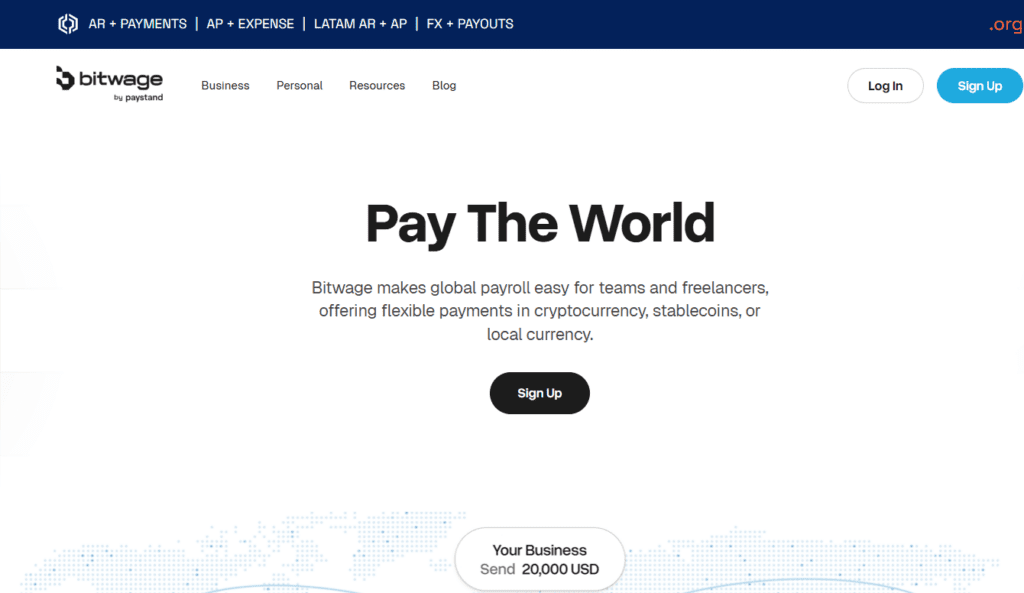
Bitwage is unique because it doesn’t care where you find your work. You could be working at a marketing agency in London or a software firm in New York.
How it Works:
- You sign up and generate a local bank account number inside Bitwage.
- You give these bank details to your employer for your direct deposit.
- Your employer sends dollars/euros/pounds.
- Bitwage receives the fiat and instantly sends Bitcoin (or stablecoins) to your personal wallet.
Our Take: This is the single most powerful tool for mainstream adoption. You don’t need to convince your boss to buy Bitcoin. They pay you as normal; you get paid in magic internet money.
Even if your client is stuck in the traditional banking world, Bitwage acts as a bridge, making it a unique entry in our list of the 7 best crypto freelance sites to get paid in bitcoin.
4. CanWork: The Decentralized Alternative
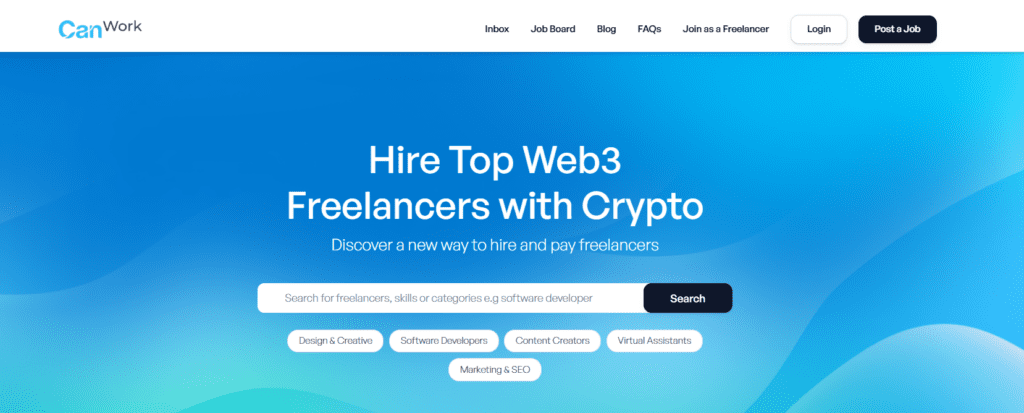
CanWork runs on the BNB Chain (Binance Smart Chain) and focuses on minimizing fees to the absolute floor.
How it Works: It uses a native token (CAN) for governance, but payments are typically settled in stablecoins or BNB. The platform takes a tiny 1% fee from the freelancer, which is revolutionary compared to the industry standard.
- The Catch: Because it is highly decentralized, the user interface can feel a bit “raw” compared to LaborX, and the volume of job postings is lower.
Our Take: It is a great backup platform. Create a profile here to catch the occasional job, but don’t rely on it as your sole source of leads.
The Security of Crypto Payments
One common question among beginners is whether the best crypto freelance sites to get paid in Bitcoin are safe.
By using decentralized protocols, these sites ensure that your ‘salary’ is transparent and verifiable on the blockchain, reducing the risk of payment fraud.
5. CryptoTask: The Zero-Fee Marketplace
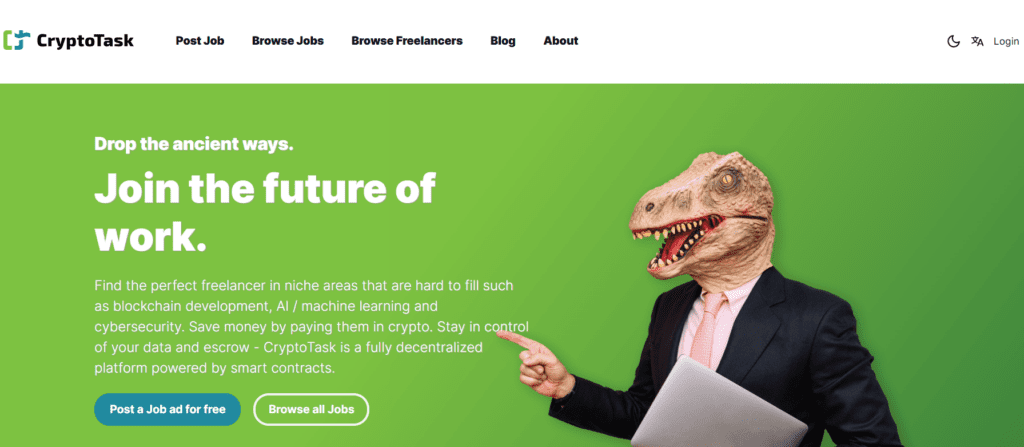
CryptoTask is another decentralized platform that boasts about its fee structure. It has been around for years and has a loyal user base.
How it Works: It uses a smart matching algorithm to connect freelancers with jobs. The standout feature is its dispute resolution system, where community members (reviewers) vote on disputes, ensuring a fairer outcome than a centralized support agent who might not understand code or design.
- Fees: They often run promotions with 0% fees for freelancers, making it highly attractive.
Our Take: CryptoTask is excellent for technical freelancers (developers, smart contract auditors). The jobs posted here tend to be more technical and higher paying.
6. Gitcoin: The Developer’s Goldmine
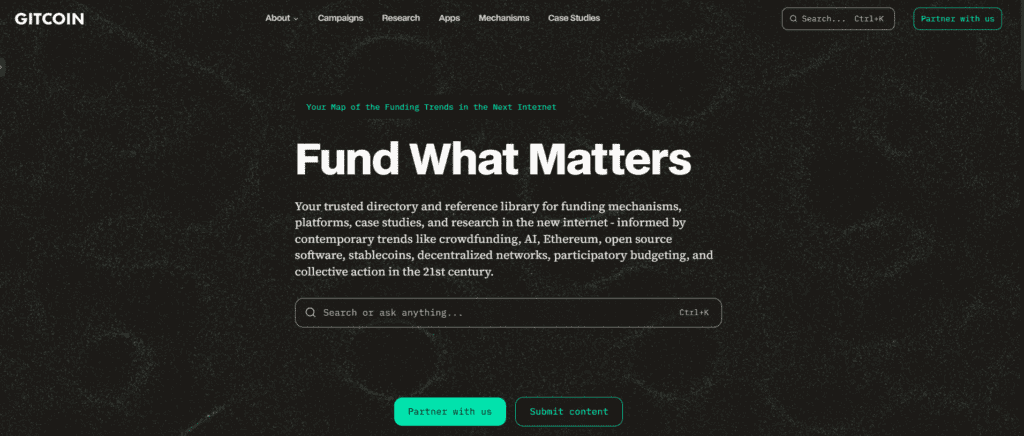
If you can write code, Gitcoin is not just a freelance site; it is a community pillar.
How it Works: Gitcoin hosts “Bounties” and “Hackathons.” Projects like Ethereum, Uniswap, or Metamask post specific tasks “Fix this bug,” “Build this feature,” “Design this UI.”
- The Reward: Each bounty has a price tag attached, usually in USDC or ETH. You submit your code; if it’s accepted, you get paid.
- Grants: You can also propose your own project. If the community likes it, they donate to you, and Gitcoin’s “Quadratic Funding” matches those donations with a huge pool of funds.
Our Take: This is the best place for developers to build a portfolio. Winning a Gitcoin bounty proves your skill on the blockchain, which is worth more than any resume.
While earning through the 7 best crypto freelance sites to get paid in bitcoin, you can further grow your wealth by moving those rewards into the best crypto staking platforms 2026 for additional passive income.
7. Working for DAOs (Decentralized Autonomous Organizations)
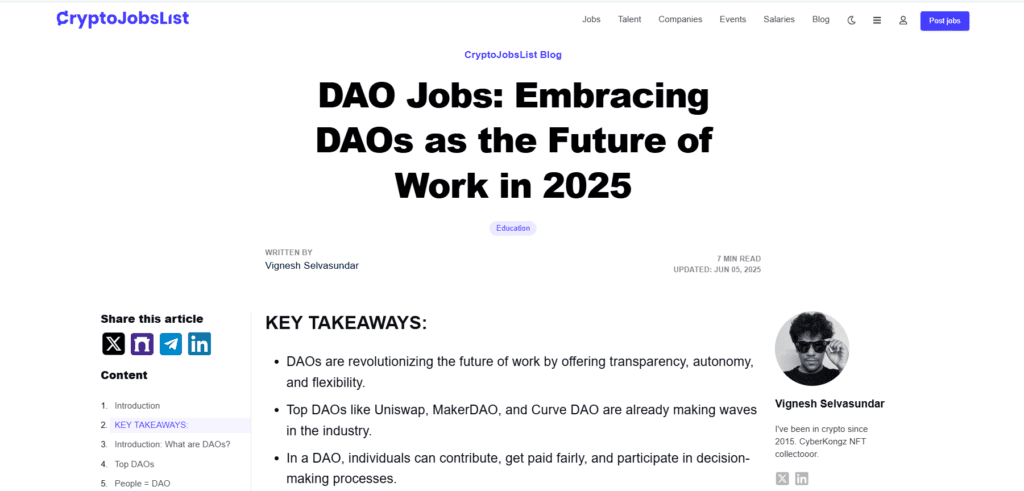
In 2026, many people don’t work for companies; they work for DAOs.
How it Works: You join the Discord server of a project you like (e.g., SushiSwap, Aave, or a specialized service DAO). You start contributing by writing newsletters, moderating chat, or proposing marketing ideas.
- Payment: You are paid via “Grants” or “Contributor Rewards” directly from the DAO’s treasury.
- Platform: Tools like Bounty3 or Dework are often used to manage these tasks, acting like a Trello board where cards have crypto bounties attached.
Our Take: This is the future of work. It is permissionless. You don’t interview; you just start working. If your work is good, the community pays you.
Choosing from the 7 best crypto freelance sites to get paid in bitcoin depends on your specific skills, whether you are a developer on Gitcoin or a creative on LaborX.
Strategy: How to Land Your First Crypto Job
To succeed on the 7 best crypto freelance sites to get paid in bitcoin, you must treat your digital wallet as your professional identity. A clean transaction history is often more valuable than a traditional resume.
Once you have successfully earned your salary from the 7 best crypto freelance sites to get paid in bitcoin, the easiest way to spend your earnings at local shops is by using the best crypto cards for crypto cashback in India to earn rewards on every swipe.
Setting Up Your Professional Web3 Resume
To stand out on the best crypto freelance sites to get paid in bitcoin, a PDF resume is no longer enough. In 2026, clients look for ‘On-Chain Proof of Work.
- Verify Your Skills: Platforms like Bondex allow you to link your GitHub or Behance directly.
- POAPs and Credentials: If you’ve participated in a Gitcoin hackathon or a DAO project, make sure to highlight any POAPs (Proof of Attendance Protocols) or ‘Soulbound Tokens’ you’ve earned. These are permanent, unchangeable digital certificates of your contribution.
- The Wallet Identity: Your public wallet address is your new LinkedIn. It shows your transaction history, the projects you’ve interacted with, and your reliability as a contributor. Building this ‘Digital Reputation’ is the secret to landing the highest-paying crypto jobs.
1. Build a “Proof of Work” Portfolio: In Web3, nobody cares where you went to college. They care about what you have done. Don’t send a resume; send a link to your GitHub, your Mirror.xyz blog, or your design portfolio.
2. Use the “Hybrid” Approach: Start by using LaborX to find crypto-specific clients. At the same time, keep your Upwork profile active but use Bitwage to convert those fiat earnings into Bitcoin. This diversifies your income streams.
3. Accept Stablecoins First: Clients are more willing to pay in USDT or USDC than in volatile assets like Bitcoin. It makes accounting easier for them. You can always swap the stablecoins for Bitcoin later. Being flexible with payment tokens gets you hired faster.
Maximizing Your Earnings: Tax and Off-Ramping for Freelancers
Earning in Bitcoin is exciting, but managing that income requires a strategy. Since Bitcoin is volatile, many top freelancers follow the ’70/30 Rule’: they keep 70% of their paycheck in stablecoins (USDC/USDT) to cover rent and bills, and convert the remaining 30% into Bitcoin for long-term growth.
If you are working from India, it is crucial to use the best crypto exchanges in India that are FIU-registered to ensure your 1% TDS is filed correctly and you stay on the right side of tax laws
As we move further into 2026, the rise of remote work has made the 7 best crypto freelance sites to get paid in bitcoin essential for digital nomads.
Conclusion
Beyond working for clients on the 7 best crypto freelance sites to get paid in bitcoin, many digital nomads diversify their income by joining the top crypto affiliate programs to earn in 2026 for high-commission passive rewards.
The future of work is decentralized. By starting your journey with the 7 best crypto freelance sites to get paid in bitcoin, you are positioning yourself at the forefront of the global digital economy.
Once you start earning from the 7 best crypto freelance sites to get paid in bitcoin, don’t let your coins sit idle put them to work on the best crypto lending platforms list 2026 to earn extra interest.
FAQ: Common Questions About Crypto Freelancing
Q: Is it legal to get paid in Bitcoin?
A: In most countries, yes. It is treated as “barter” or “payment in kind.” You provide a service; they provide an asset. However, you are still responsible for income tax based on the fiat value of the crypto at the time you received it.
Q: What if the price crashes after I get paid?
A: That is the risk. That is why we recommend asking for payment in USDC or USDT (stablecoins). This locks in the value of your work. You can then choose when to buy Bitcoin or Ethereum.
Q: Do I need a contract?
A: On platforms like LaborX, the “Smart Contract” is the contract. It holds the funds in escrow. For direct work, always use a standard freelance contract that specifies the wallet address and the exchange rate source to avoid disputes.
Q: Can I use these sites from anywhere?
A: Yes. That is the beauty of crypto. Whether you are in India, Nigeria, Brazil, or the US, the blockchain doesn’t care. As long as you have an internet connection and a wallet, you can work and get paid.